How to calibrate a torque transducer?
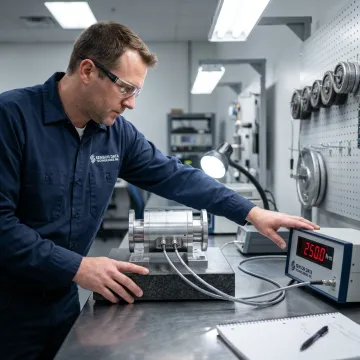
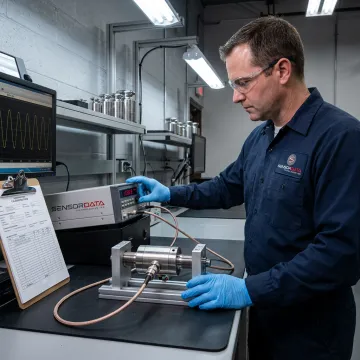
A torque transducer is calibrated by applying known torque values across its operating range and comparing the transducer output to the reference standard. The technician records response, linearity, repeatability, and any deviation from expected performance. SensorData Technologies reviews the results, verifies the instrument’s behavior, and can issue calibration documentation with traceable measurement data for quality records.
Do transducers need to be calibrated?
Yes. Torque transducers should be calibrated because mechanical loading, environmental conditions, cable changes, electronics, and normal use can shift output over time. Regular calibration confirms the sensor still performs within acceptable limits and helps prevent inaccurate test data. It also supports audit readiness, maintenance planning, and confidence in production, research, or validation measurements.
How often should a torque transducer be calibrated?
Most torque transducers benefit from calibration on a planned interval based on usage, criticality, environment, and internal quality procedures. High-cycle, safety-critical, or heavily loaded applications may require more frequent checks than instruments used occasionally. Calibration is also recommended after overload events, repairs, long storage periods, or whenever measurement results appear inconsistent.
What is included in a calibration certificate?
A calibration certificate typically documents the instrument identification, calibration results, traceable measurement data, and verification of sensor performance at tested points. This record helps engineering and quality teams confirm accuracy, maintain equipment histories, and support customer or internal audits. SensorData Technologies offers calibration certification as part of its precision sensor support services.
Can SensorData Technologies recalibrate older torque sensors?
Yes. SensorData Technologies provides sensor recalibration services to help restore existing sensors to their original accuracy and verify ongoing performance. The team can evaluate the transducer’s condition, review output behavior, and determine whether recalibration is appropriate. If application issues are involved, engineering consultation can help identify related system or setup concerns.
Do I need engineering consultation before calibration?
Engineering consultation is useful when the torque measurement application is complex, custom, or experiencing inconsistent results. It can help confirm the right sensor range, mounting approach, electronics, and documentation needs before calibration work begins. For straightforward recalibration, consultation may be brief, but it still helps ensure the service matches the instrument and application.
Can custom torque measurement systems be calibrated?
Yes. SensorData Technologies supports demanding measurement applications and custom measurement systems that may include sensors, electronics, signal conditioning, and data acquisition. For custom torque systems, calibration planning may consider fixtures, operating range, output type, and application constraints. This helps ensure the calibrated result reflects how the transducer is actually used.
What happens if a torque transducer is out of tolerance?
If a transducer is found outside acceptable performance limits, the results should be reviewed before the instrument is returned to critical service. SensorData Technologies can help evaluate whether recalibration, repair considerations, replacement parts, or engineering support may be appropriate. Documenting the finding also helps determine whether prior test data should be reviewed.