What is measurement control and instrumentation?
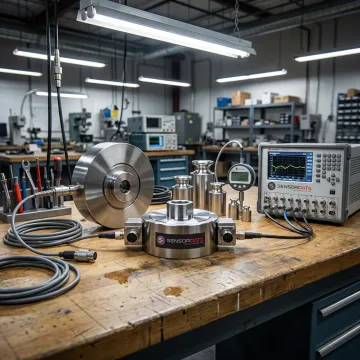
Measurement control and instrumentation involves using sensors, transducers, signal conditioning, electronics, and data acquisition tools to capture, verify, and manage physical measurements. In industrial testing, this may include force, torque, load, pressure, displacement, or multi-axis data. The goal is to produce accurate, repeatable measurements that support product validation, process control, safety, and engineering decisions.
What industries use measurement control and instrumentation services?
SensorData Technologies supports applications across automotive, medical, military and defense, agriculture, construction, petroleum and mining, power generation, space, tire manufacturing, vehicle manufacturing, material testing, component life cycle testing, and structural testing laboratories. These environments often require rugged sensors, traceable calibration, fatigue-rated performance, and custom engineering to meet demanding measurement requirements.
Can you design a custom sensor for my application?
Yes. SensorData Technologies provides custom sensor design, engineering, and manufacturing for force, torque, load, pressure, and displacement measurement needs. Custom work may include specialized mechanical configurations, unique capacity ranges, environmental considerations, signal output requirements, or integration with electronics and data acquisition. The goal is to create a measurement solution matched to the application rather than forcing a standard product to fit.
What is included in sensor calibration and recalibration?
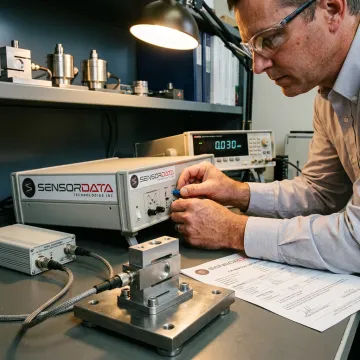
Calibration verifies that a sensor is measuring accurately against traceable standards, while recalibration restores or confirms performance after use. SensorData Technologies provides calibration and recalibration services, including calibration certificates with traceable measurement data. Regular recalibration helps maintain reliable test results, supports compliance needs, and reduces the risk of decisions based on drifting or inaccurate measurements.
How often should measurement sensors be recalibrated?
Calibration frequency depends on how critical the measurement is, how often the sensor is used, operating conditions, and internal quality requirements. Sensors used in harsh environments, high-cycle testing, or compliance-driven programs may need more frequent recalibration. SensorData Technologies also offers free calibration on certain models for the first four years, helping customers maintain long-term accuracy and confidence.
Do you provide calibration certificates?
Yes. SensorData Technologies issues calibration certificates with traceable measurement data to verify sensor accuracy and support quality documentation. These certificates are valuable for regulated testing environments, engineering validation, internal audits, and customer requirements. They help confirm that force, torque, load, pressure, or displacement sensors are performing within documented expectations at the time of calibration.
How do I choose the right measurement system?
The right measurement system starts with the physical variable being measured, required accuracy, load range, environment, mounting constraints, output signal, and data acquisition needs. SensorData Technologies offers technical and engineering consultation to help define these requirements. For complex applications, the team can integrate sensors, electronics, signal conditioning, and data acquisition into a complete custom measurement system.
What guarantees or support do you offer?
SensorData Technologies supports customers with competitive pricing, quoted delivery schedules, and responsive professional service. Standard sensors are backed by a 60-day return policy with a 100% satisfaction guarantee, and select products may include lifetime warranty options. Depending on the situation, the company may provide free repair service or replacement parts at its discretion.